2025 / Startup SaaS
Startup Ladder: data-driven diagnosis and growth
Product strategy, UX, and landing page work for a platform that helps early-stage startups, incubators, and innovation programs measure maturity, benchmark performance, and prioritize next steps.
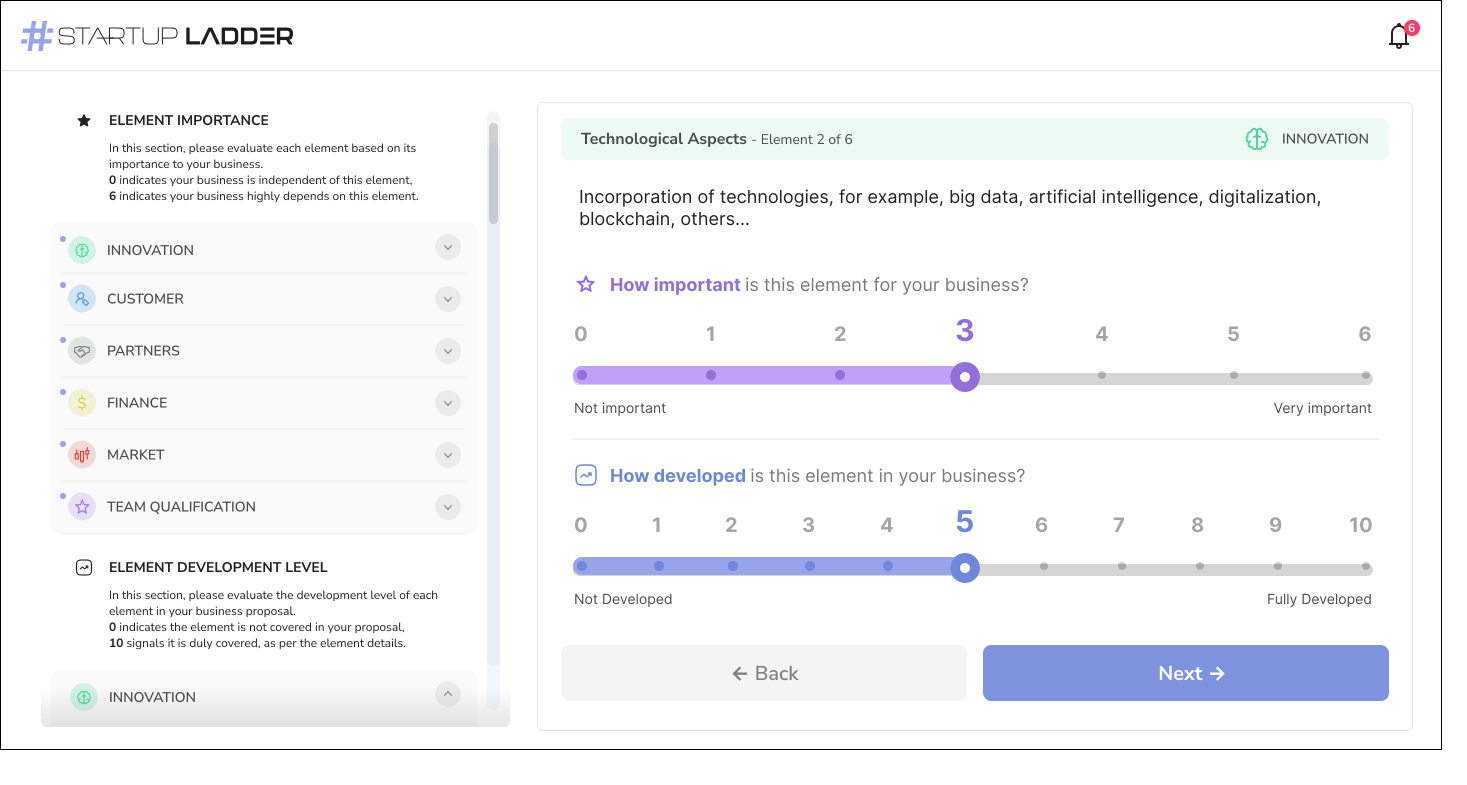
Startup Ladder was conceived as a digital intelligence platform for startups. The goal was to help founders, incubators, and innovation programs understand a company's current stage, identify operational gaps, compare performance against similar businesses, and prioritize next steps based on structured data.
My role sat between strategy and execution. I worked directly with the client to turn an initial vision into a viable product: organizing scope, translating business needs into features, structuring journeys, shaping the diagnostic experience, and defining the commercial layer of the WordPress landing page.
From concept to product
The main challenge was to sell and materialize something less tangible than a common operational tool: strategic clarity. Startup Ladder needed to answer questions founders ask too early to have perfect data, but too late to keep relying only on instinct: where are we now, which gaps matter, how do we compare to the market, and what should we improve first?
From there, the architecture was organized into three moments. First, a guided assessment collects signals about the startup's maturity. Then, the system turns those answers into a reading of gaps, scores, and opportunities. Finally, the dashboard presents comparisons and recommendations that help the team decide where to focus energy.
A platform for more than one audience
The product needed to serve founders and startup teams, but also incubators, accelerators, and innovation ecosystems. For founders, the value was understanding their own stage and receiving practical direction for growth. For institutions, the value was tracking multiple startups through a comparable view, identifying patterns, and directing mentorship more precisely.
That audience split shaped both the system structure and the communication. The individual experience needed to be clear enough for a startup to use on its own, while the institutional proposition needed to support portfolio reading, credibility, and decision-making inside innovation programs.
Dashboard as a decision surface
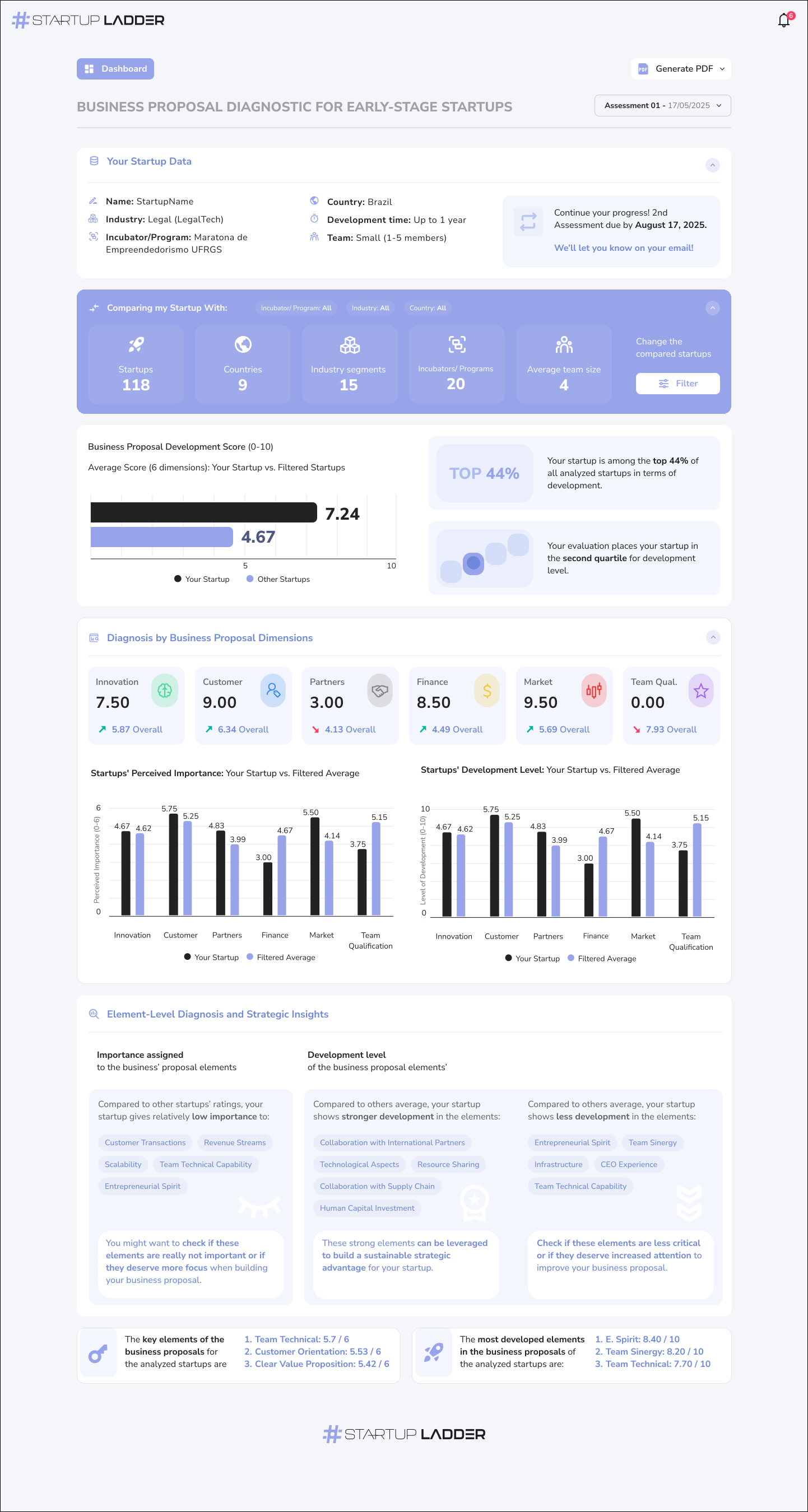
The dashboard was designed as the product's synthesis. It should not only display scores, but turn the diagnosis into an actionable reading: strengths, gaps, comparisons, and evolution. The goal was to reduce ambiguity and help prioritize what comes first, what can wait, and what needs immediate attention.
Licenses and recurrence
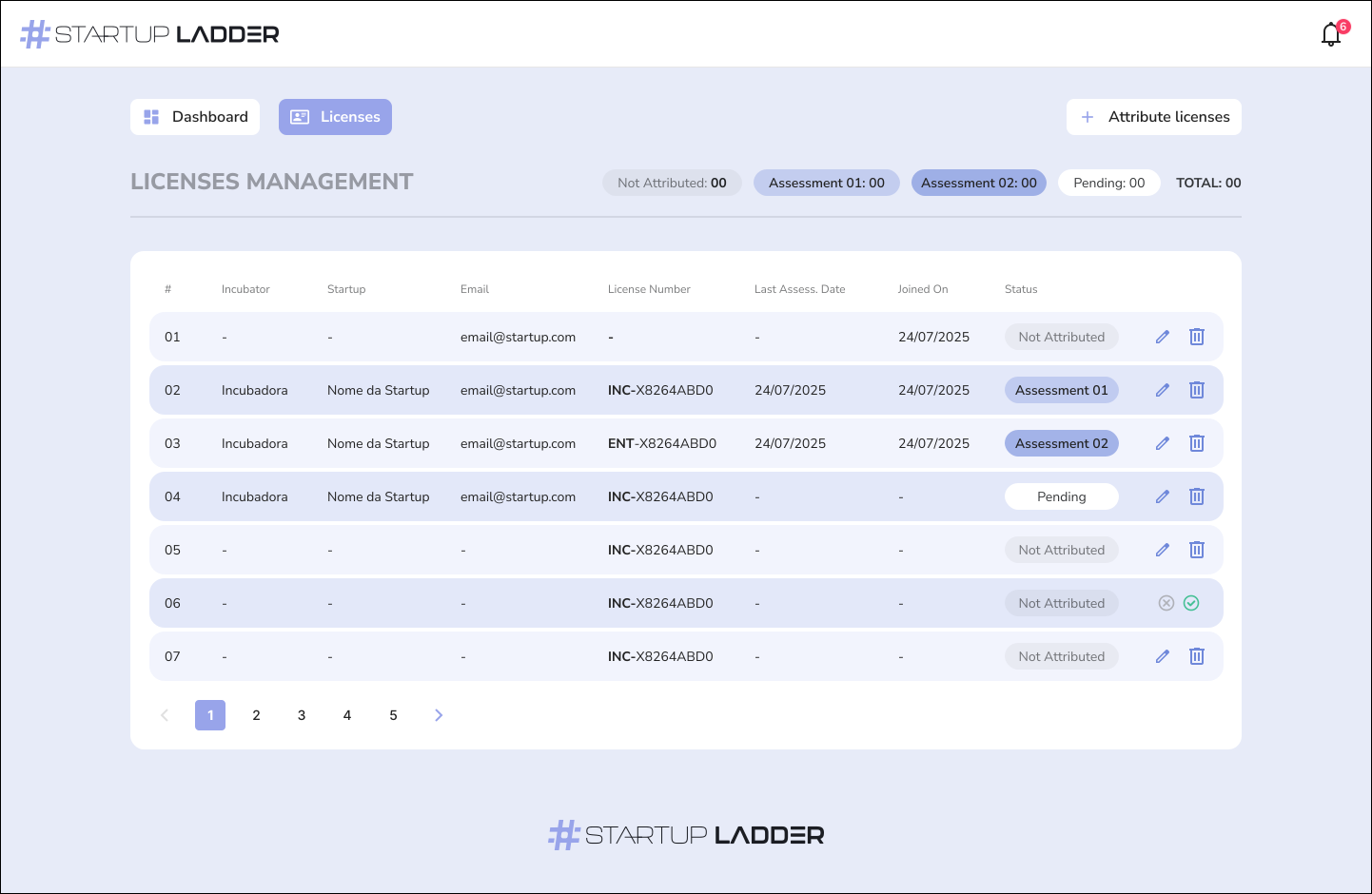
An important part of the product was preventing the assessment from becoming a one-off event. The license and reassessment logic made it possible to measure progress over time, supporting an ongoing follow-up cycle. This was especially relevant for programs and incubators, which need to prove evolution and adjust resources throughout the startup journey.
Landing page and acquisition
Beyond the internal product, I also structured the WordPress landing page. Its role was to build trust, explain the method, and convert visitors into users or commercial conversations. The narrative was shaped around pain points, how it works, benefits, benchmarking value, authority proof, offer, and calls to action.
I also recommended a future evolution with audience-specific landing pages. Founders and institutions have different motivations, so dedicated campaigns could increase clarity and conversion without forcing the same page to handle every argument at once.
Learning
Startup Ladder was a product project before it was an interface project. The core delivery was turning a business idea into a clear digital structure: what to measure, how to guide the assessment, how to present results, and how to communicate value to audiences with different expectations.
The strongest learning was to treat data as a decision language. The value was not only in the diagnosis, but in how the platform helped people see priority, comparison, and progress with less noise.